

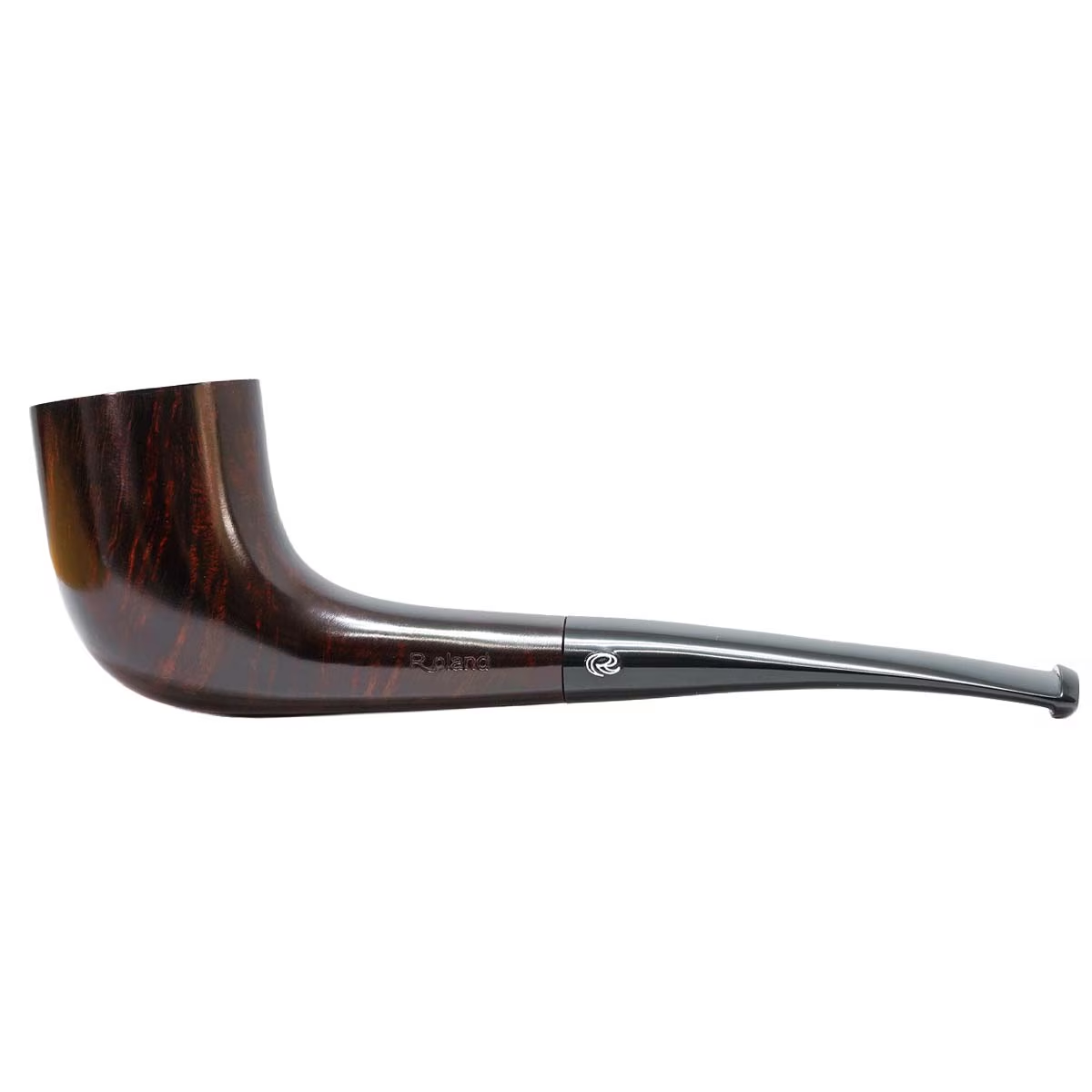
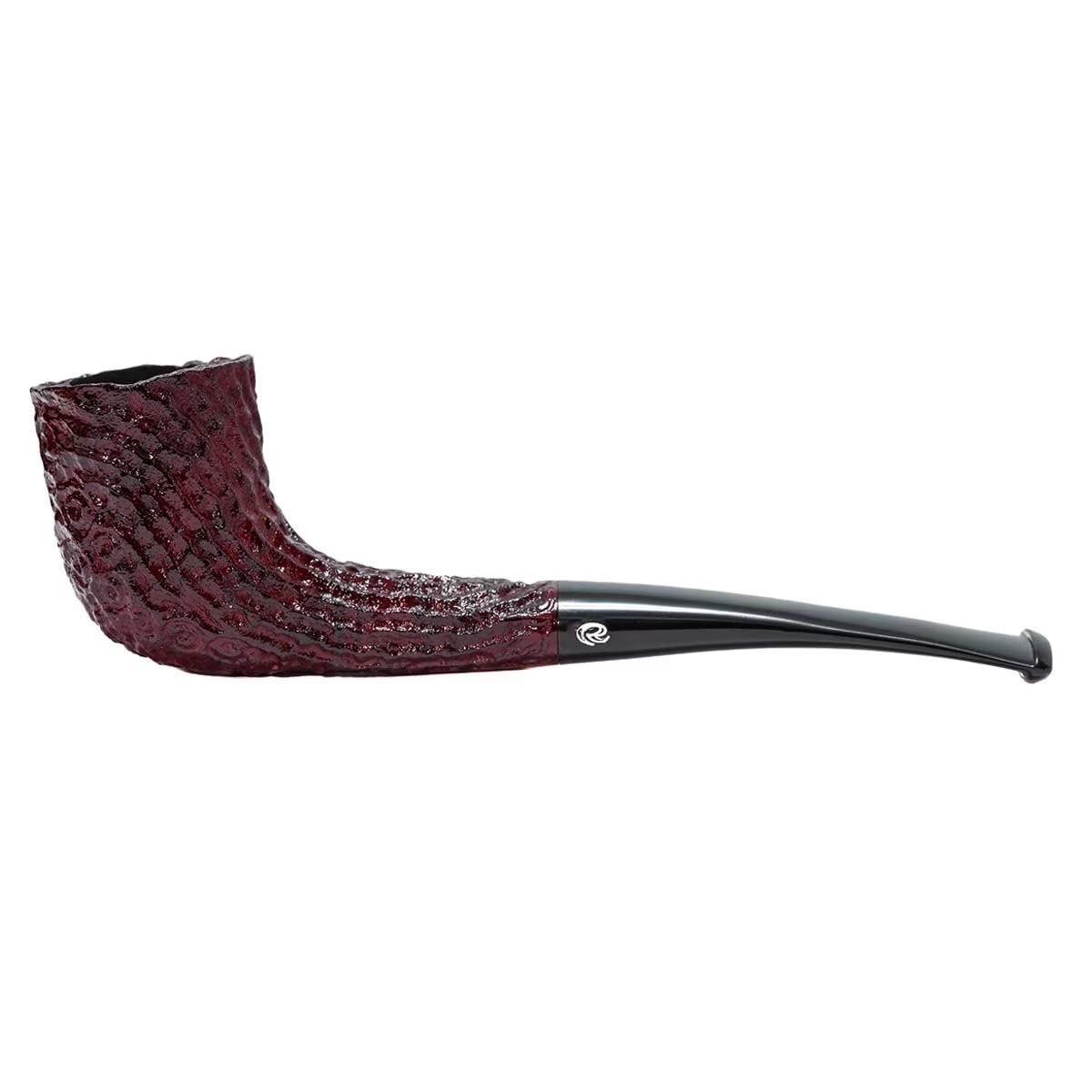

Roland - a Japanese brand of pipes and tobaccos with nearly a century of tradition
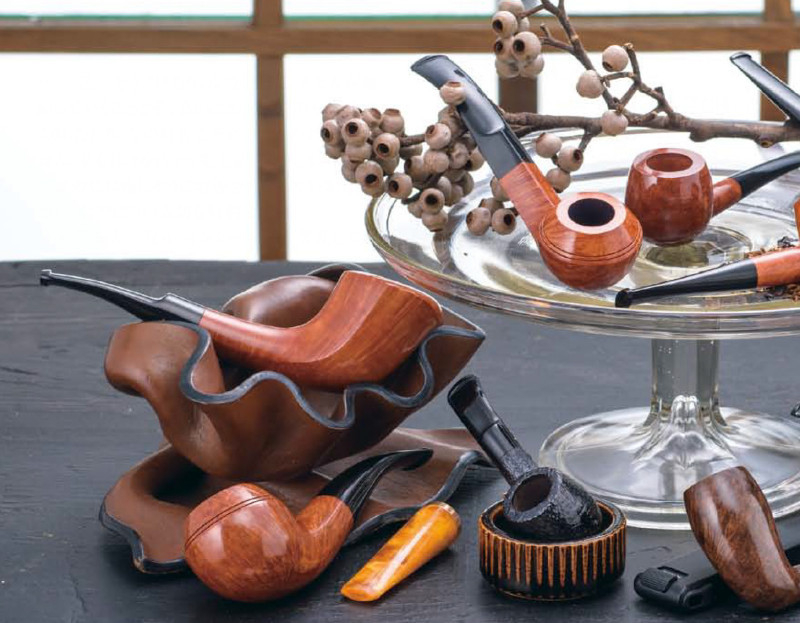
Roland does not feature prominently in the history of pipe smoking, but for this reason, it attracts the attention of connoisseurs. In connection with the Tokyo house Ginza Kikusui, a tradition of quality tobacco, and the work of pipe maker Fukashiro Tsutomu, it represents a brand where craftsmanship, style, and a cultivated smoking culture converge. Roland is a symbol of Japanese elegance that has endured to this day.
In the world of pipes, there are famous names that everyone knows. And then there are brands that have never belonged to the loudest, but precisely because of that, they are interesting to connoisseurs. Roland is one of them. In the Japanese environment, it represents a combination of pipe-making craftsmanship, tobacco culture, and a long trading tradition of Tokyo's Ginza district.
The Roland brand is owned by the Fukashiro company, whose beginnings date back to 1924. The business at that time was called Fukashiro Shoten and its founder, Fukashiro Morisaburō, began importing and selling smoking accessories from Europe.
The production of its own pipes began in 1930. In 1934, the Japanese pipe Momoyama was introduced. At the request of the then government monopoly, 200 pipes were produced, which were marked as Momoyama and gifted to significant personalities of that time. This is considered the true beginning of the full-scale production of briar pipes in Japan, and it is also during this time that the Roland pipe brand appeared. The Roland brand is therefore regarded as one of the oldest brands of Japanese pipes.
Origin of the name "Roland"
The name Roland, now known to many pipe smokers, was inspired by the name of the French thinker and Nobel Prize winner in literature Romain Rolland, a symbol of pacifism and humanism. As a smoking instrument for moments of peace and relaxation in the daily hustle, the Roland pipe brand also emerged.
The old master striving for innovation and beauty
Japanese Roland pipes are made in Gunma Prefecture at the workshop Fukashiro Smokers. Thanks to the tradition passed down in the Fukashiro family, craftsmanship, and emphasis on high quality, meticulously finished products are still made today. From the first pipe to the piece that becomes a lifelong companion for the smoker, the Roland brand continues to carry the ideal of "Japanese quality pipe."
The Roland brand is thus associated with the renowned Japanese pipemaker Fukashiro Tsutomu. Tsutomu belongs to respected Japanese pipemakers, and his work is valued for its clean shapes and the influence of the Danish pipe school.
Iconic models and brand character
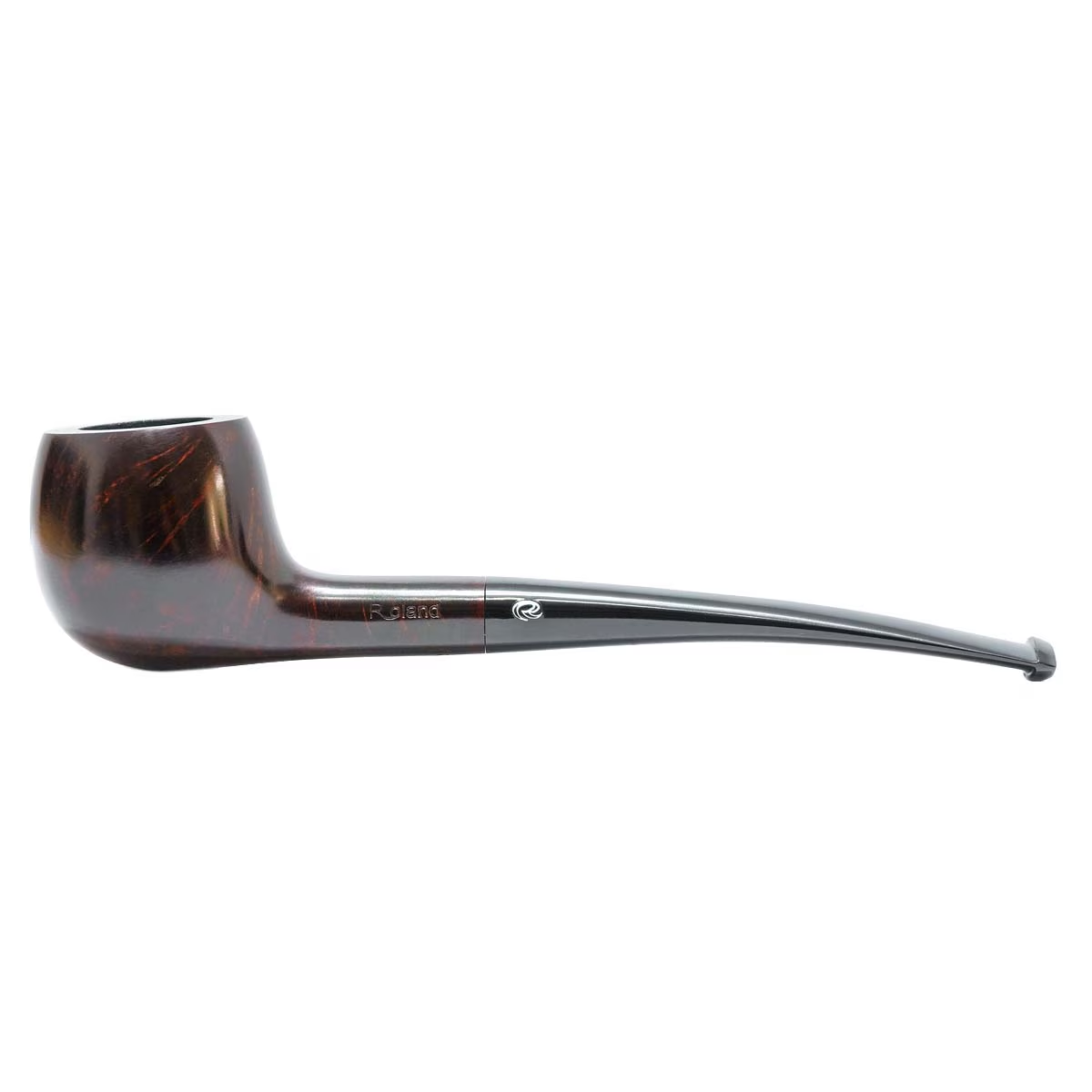
Among the models is, for example, President by Roland, known as a briar pipe in a classic bent billiard design. This well captures the overall character of the brand. Roland did not build its identity on extravagant shapes but on well-crafted classics.
In some collector circles, Roland is also mentioned for its "English" expression. Some pieces resemble traditional British pipe concepts—straight, balanced, with an emphasis on proportions. This corresponds well to the broader trend of Japanese production in the second half of the 20th century: adopting European patterns but processing them with their own meticulousness and technical cleanliness.
Roland pipes generally have a classic impression, not relying on extravagance but on proven shapes and balanced proportions. Other designations such as President, Old Briar, Super Old Briar, Vogue, or Regal also appear. The very names indicate that the brand worked with the idea of a traditional briar pipe, serious style, and conservative elegance.
This is precisely what is typical for Roland—pipes that do not seek to be flashy at all costs but build on a cultivated appearance and good usability.
The Roland brand is not only represented by pipes but also by pipe tobacco
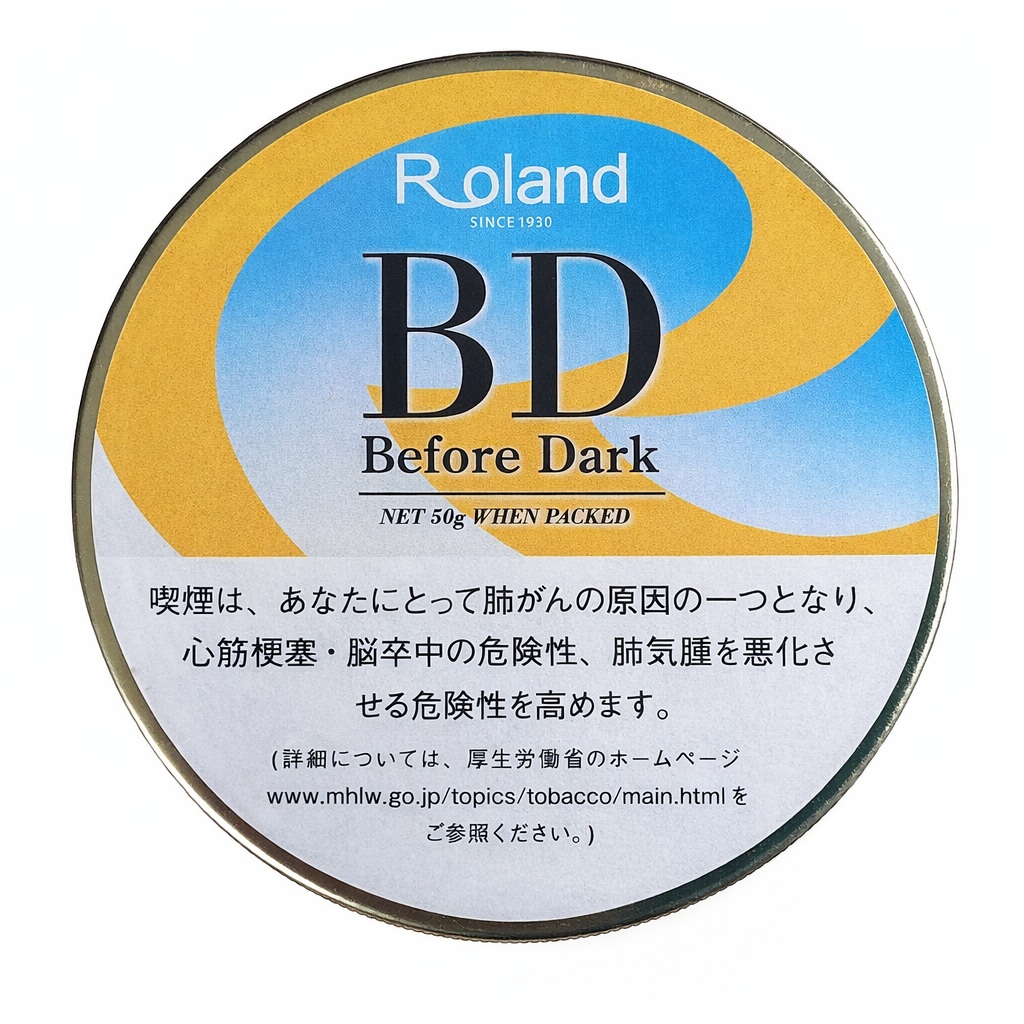
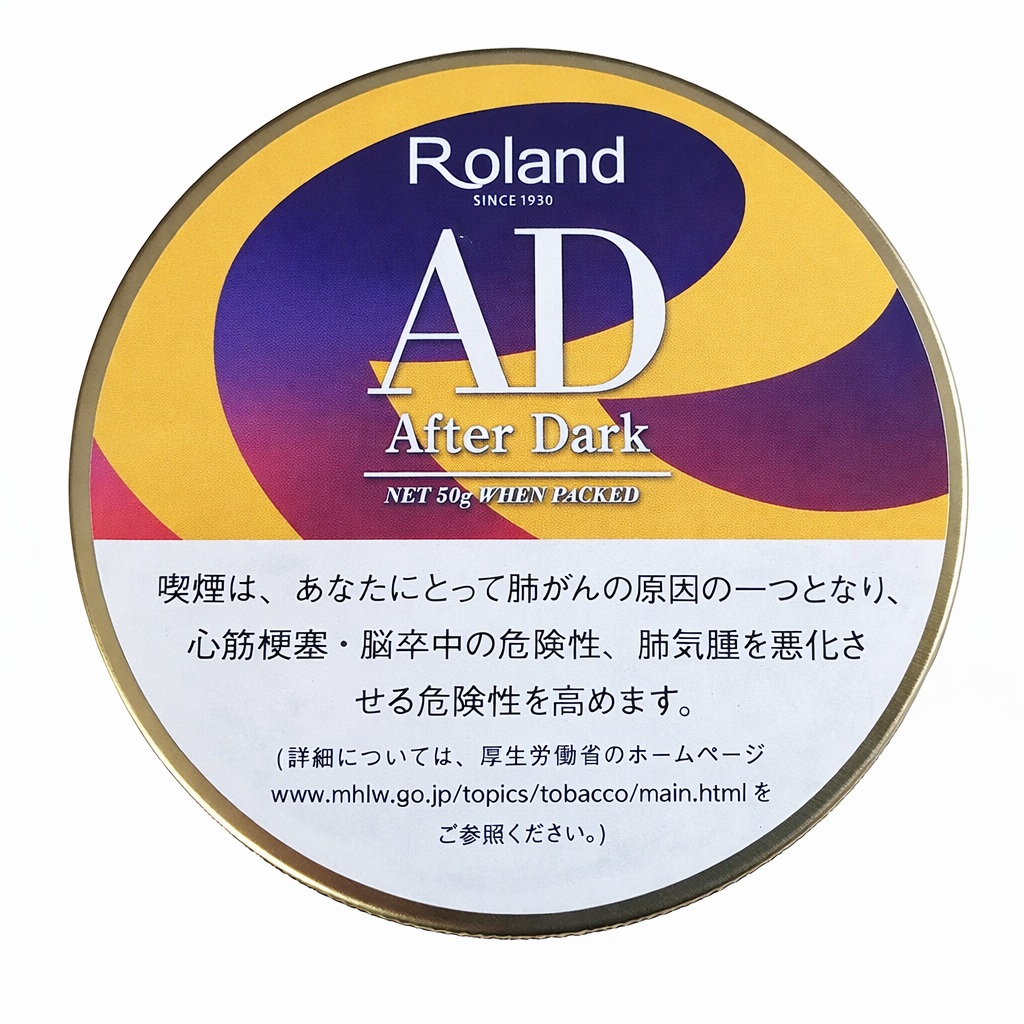
Roland is interesting not only because its name is associated with briar pipes but also lives on as a brand of pipe tobacco. The tobaccos are sold under the names Before Dark and After Dark. Even those names are a small sample of refined poetry. They are not aggressive. They do not try to sell strength but create an atmosphere. Interestingly, the tobaccos are blended in Germany, but they are intended for sale only in the Japanese market.
Roland Before Dark sounds like a tobacco for late afternoon. At a moment when the day has not yet completely broken, but the light is already softening. The blend is described as aromatic, with notes of vanilla and nuts, while striving to preserve the natural sweetness of the tobacco itself.
Roland After Dark on the other hand leans towards a stronger position. It is a blend with latakia, but not raw and hard. More evening, calm, harmonious. One that does not wish to dominate the room but to accompany moments of silence and relaxation.
Roland is here as a brand of atmosphere. Mornings, twilight, evenings. Pipes, tobacco, tempos that slow down. And that is exactly what we want from good tobacco culture.
Conclusion
Today, Roland does not act as a mass-known brand but rather as a name that holds weight among connoisseurs and collectors of Japanese pipes. Its value does not lie in persistent marketing or in a legend inflated by advertising. It stands on something else - on Japanese tradition and emphasis on quality.
This combination is precisely what makes the Roland brand an interesting phenomenon. It is a brand that clearly shows that Japanese pipe culture did not only rely on the import of Western patterns but was also able to create its own, distinctive, and cultivated expression.