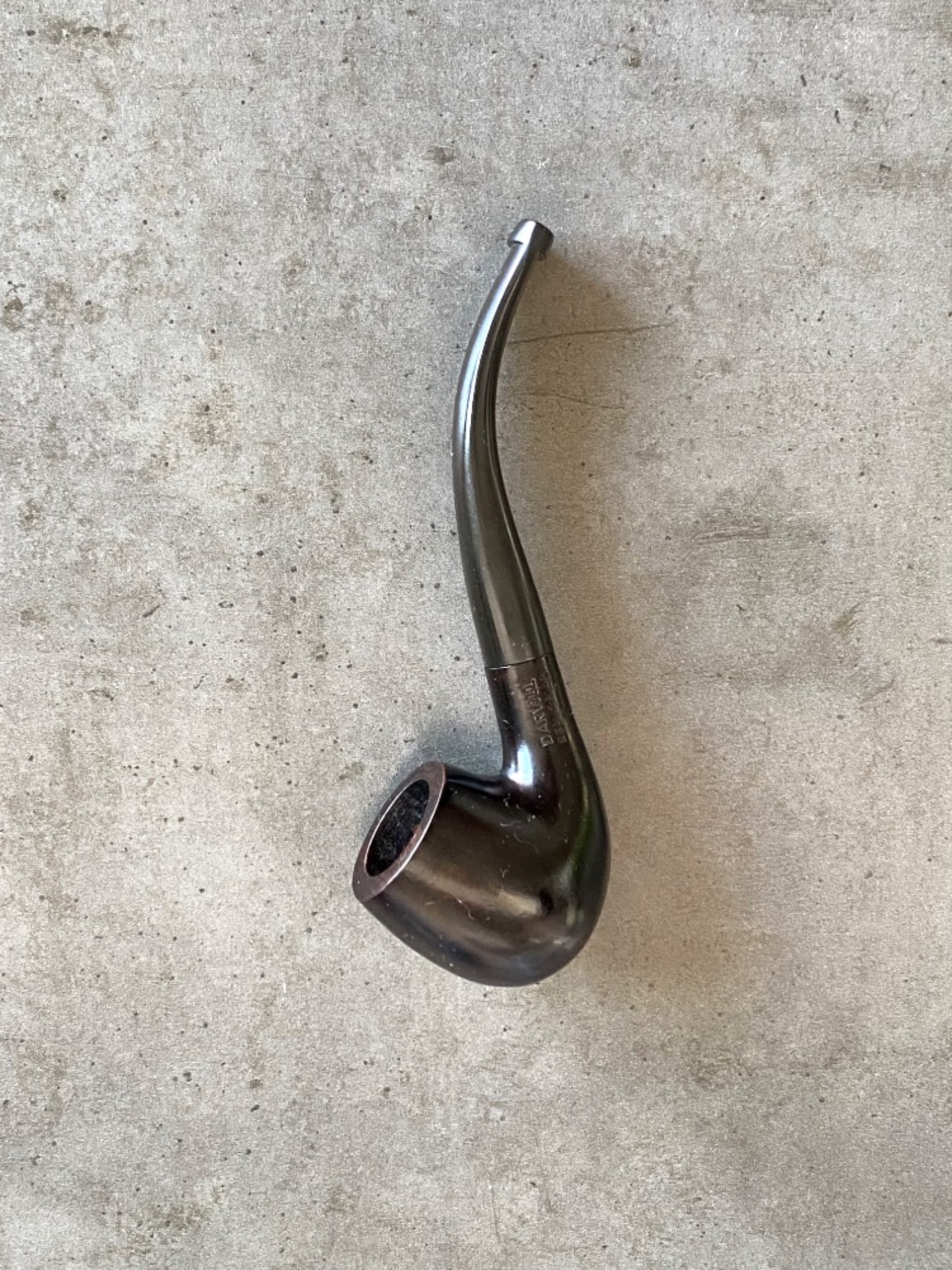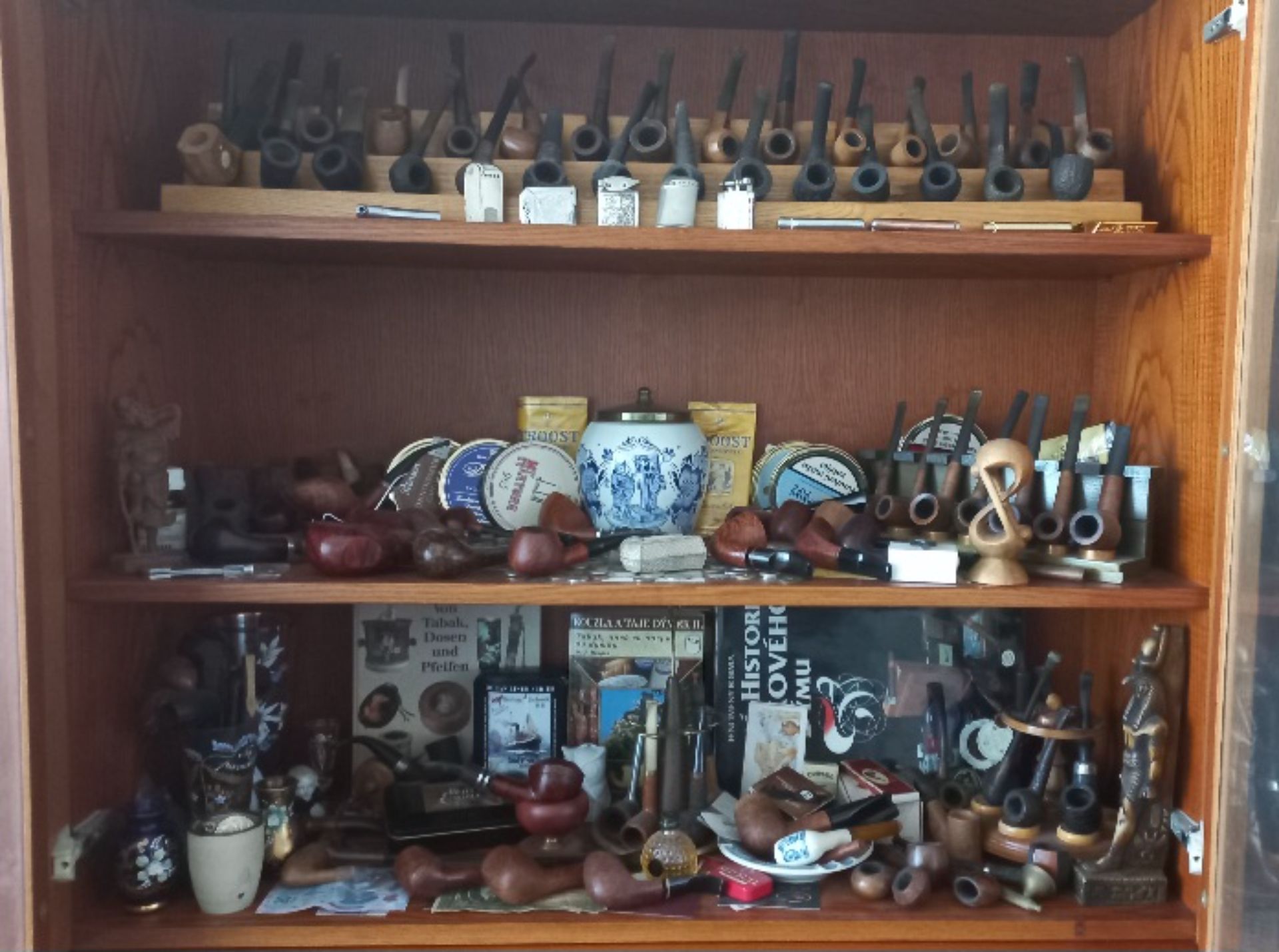

3xLatakia
23 hours ago • Praha 6, ? km • Offer
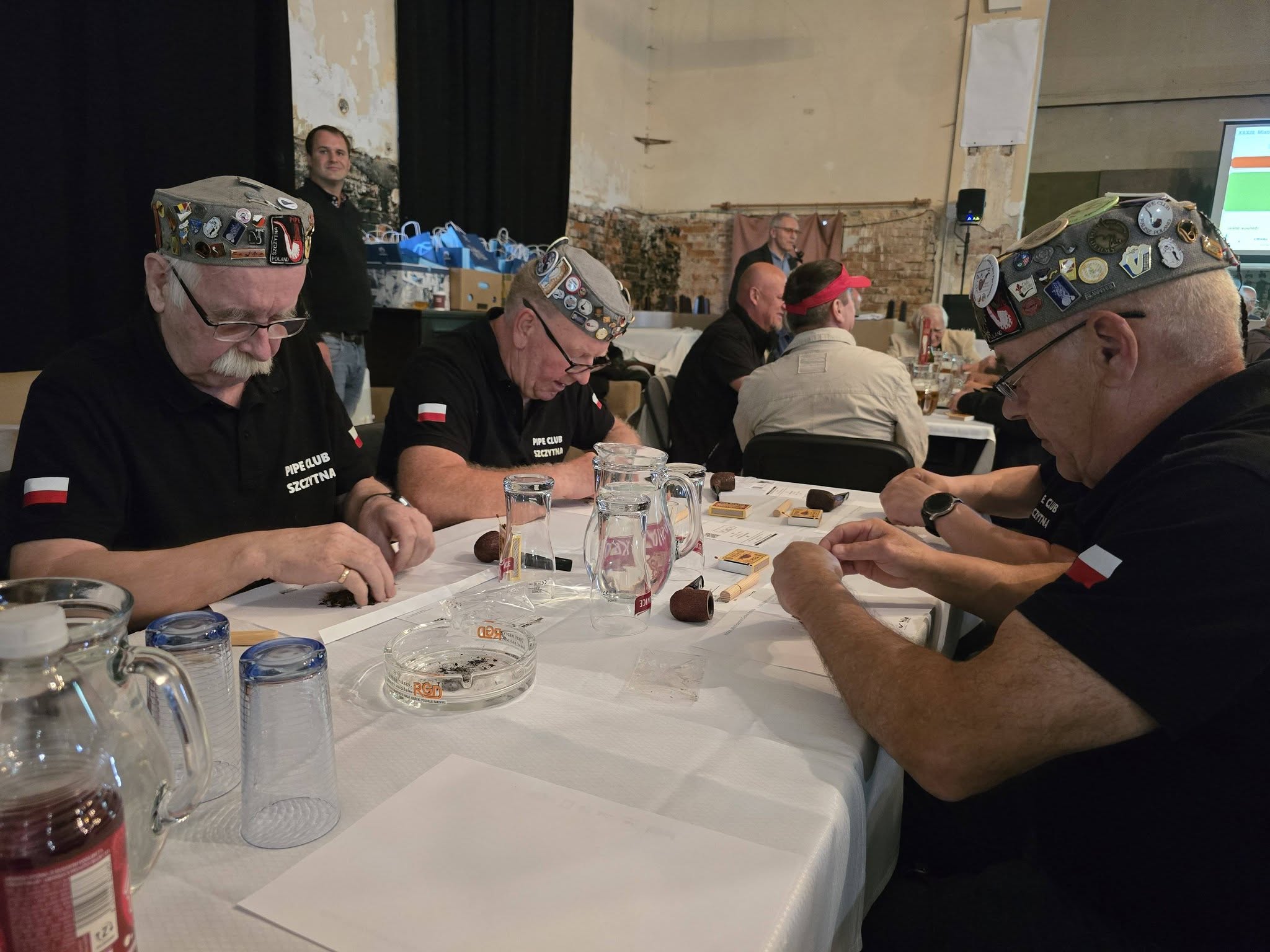
The organizers of this year's World Championship in Slow Smoking, held in the Italian spa town of Abano Terme, have prepared a humorous invitation and reminder for the event. Detailed information can be found in this article https://www.pipeclub.eu/novinky/560-pipe-world-cup-italy-2026-mistrovstvi-sveta-v-pomalem-koureni-dymky-v-italii.
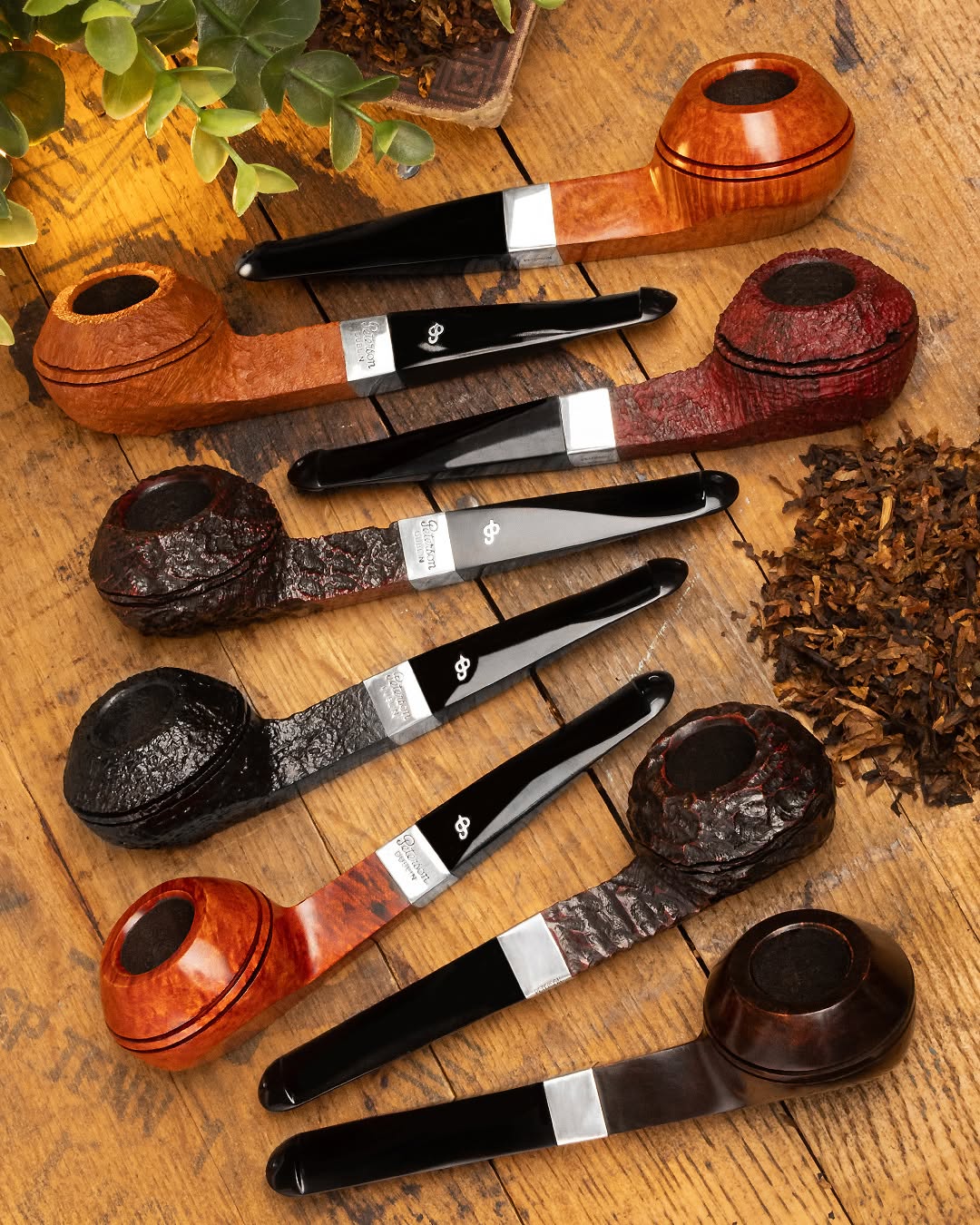
Although Peterson is a traditional Irish brand associated with Dublin, current Peterson pipe tobaccos are produced by Scandinavian Tobacco Group (STG) in Denmark. Even before the brand was acquired in 2018, STG was responsible for the production of most Peterson tobaccos in Denmark.
Peterson is an Irish brand with a long history, but the current tobaccos are made in Denmark. The Irish origin primarily refers to the brand's history and identity. It is important to distinguish between Peterson tobaccos and Peterson pipes, the production of which is still directly linked to Ireland.
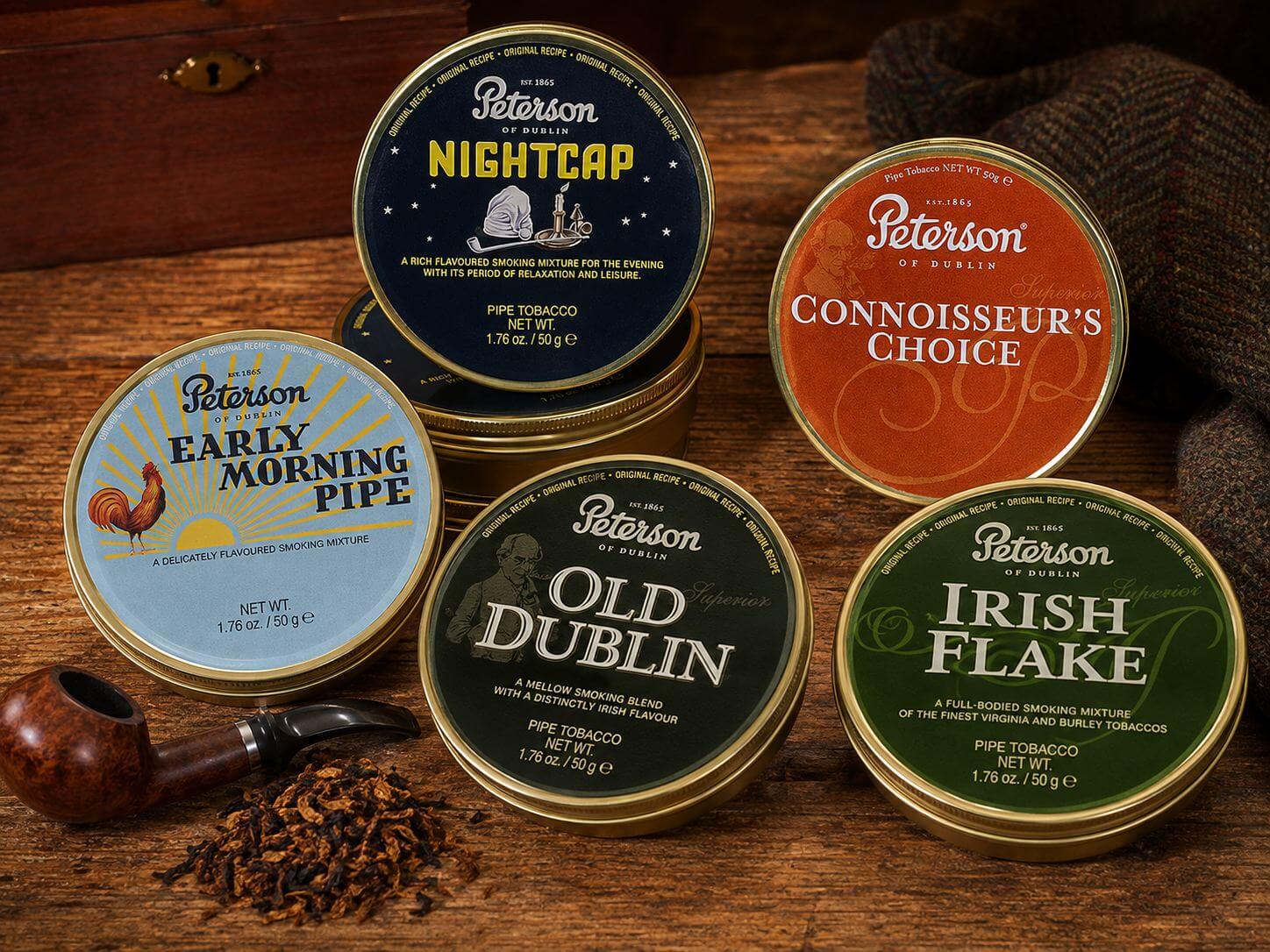
Among the strongest current Petersons are primarily Irish Flake and Nightcap. Irish Flake gains its fullness mainly from a combination of Virginia, Burley, and Dark Fired Kentucky. Nightcap is a strong English mixture with Virginia, Latakia, oriental tobaccos, and Perique. Royal Yacht also has a more pronounced nicotine strength.
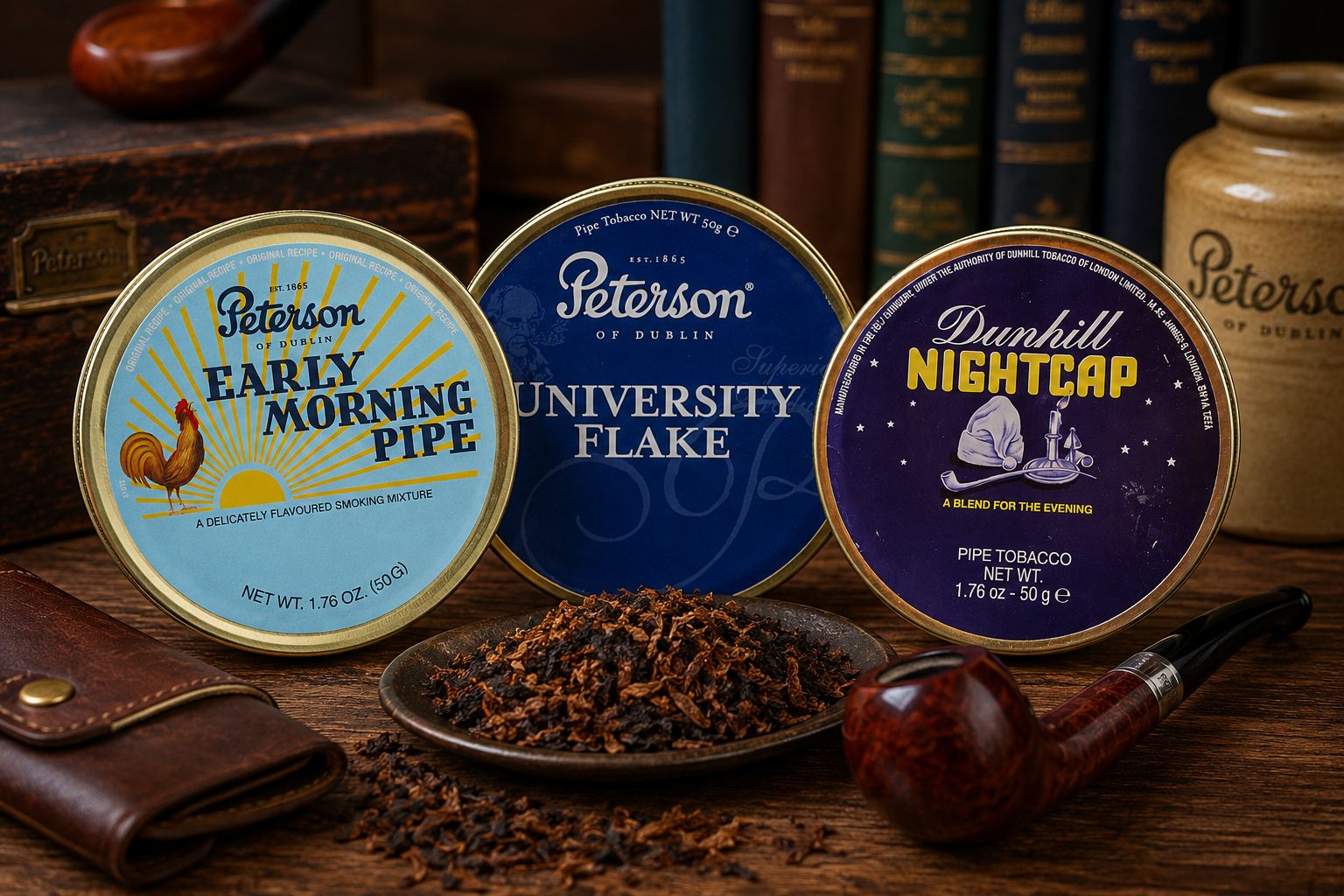
Latakia is primarily found in traditional English mixtures. These include Peterson Old Dublin, Early Morning Pipe, My Mixture 965, Nightcap, Standard Mixture, and Balkan Mixture. The individual blends vary significantly in the amount of Latakia and overall intensity. For a first introduction to Latakia, Early Morning Pipe or Old Dublin is more suitable, while Nightcap represents a much fuller and more pronounced smoke.
It mainly depends on what type of tobacco the beginner pipe smoker wants to try. From aromatic blends, one can start with De Luxe Mixture or Connoisseur's Choice. For a first experience with Latakia, Early Morning Pipe is interesting, while Peterson Flake can present the natural taste of Virginia. On the other hand, Irish Flake or Nightcap are more suitable for more experienced smokers due to their strength.
Among the well-known aromatic Petersons are De Luxe Mixture, Connoisseur's Choice, Killarney, Luxury Blend, Yellow Mixture, Special Cut, and Connemara Black. Their aromas range from vanilla, honey, and nuts to caramel and amaretto, as well as cherries, rum, or tropical fruits.
All three blends were originally popularized by the Dunhill brand and are now sold under the Peterson brand. Early Morning Pipe is the mildest of the trio, and Latakia is not dominant in it. My Mixture 965 offers a fuller, rounded flavor with Latakia, oriental tobaccos, and Cavendish. Nightcap is the strongest and most pronounced – besides Latakia, it also contains Perique, which adds spicy and peppery notes.
Perique is an important component of several Peterson blends. It is prominently featured in Elizabethan Mixture, De Luxe Navy Rolls, and Nightcap, and is also found in Balkan Mixture. In Virginia/Perique blends, Elizabethan Mixture and De Luxe Navy Rolls have Perique as one of the main flavor components.
VaPer is an abbreviation for Virginia + Perique. Virginia typically brings natural sweetness, notes of hay, citrus, bread, or fruit, while fermented Perique adds peppery spiciness, spices, and notes of dark or dried fruit. Typical Peterson VaPer blends include Elizabethan Mixture and De Luxe Navy Rolls.
Scandinavian Tobacco Group began re-selling a range of historical blends under the Peterson brand that were previously known as Dunhill. Therefore, today we find names like Early Morning Pipe, Nightcap, My Mixture 965, Elizabethan Mixture, Royal Yacht, or De Luxe Navy Rolls on Peterson tins. This is a continuation of the famous historical blends under the Peterson brand.
For some blends, names referring to flavor or aroma were changed due to European regulations on tobacco product labeling. Therefore, for example, Irish Whiskey is sold as Irish Mixture, Sweet Killarney as Killarney, Nutty Cut as Special Cut, and Sunset Breeze can be found as Yellow Mixture. Under different names, you may encounter the same or corresponding blend.
For sweeter aromatic smoking, you might try De Luxe Mixture or Connoisseur's Choice. Lovers of natural Virginias may prefer Peterson Flake, while fans of Virginia/Perique blends might enjoy Elizabethan Mixture or De Luxe Navy Rolls. For smoking blends with Latakia, Old Dublin, Early Morning Pipe, My Mixture 965, or Nightcap are intended. Those looking for a strong, dark, and distinctly tobacco Peterson should consider Irish Flake.
Italy boasts a long tradition of pipe making, with Italian pipe makers benefiting from the quality briar that grows in the Mediterranean.
Among the most famous Italian pipe makers are Savinelli, Castello, Brebbia, Ardor, Caminetto, Radice, Ascorti, Mastro de Paja, Ser Jacopo, Il Ceppo, Don Carlos, Rinaldo, L'Anatra, and Claudio Cavicchi.
It depends on whether we count the establishment of the brand, the shop, or the actual manufactory. The history of Savinelli begins with the opening of the Milan shop in 1876, while the Rovera family connects the production of Ardor pipes with the year 1911. Modern manufactories like Castello, Brebbia, and Savinelli significantly developed after World War II.
The Pesaro School or Scuola di Pesaro refers to a group of pipe makers and pipe workshops that emerged from the early 1970s in Pesaro and its surroundings. A key figure was Giancarlo Guidi, and among the most famous brands of this tradition are Mastro de Paja, Ser Jacopo, Il Ceppo, Don Carlos, Rinaldo, and L'Anatra.
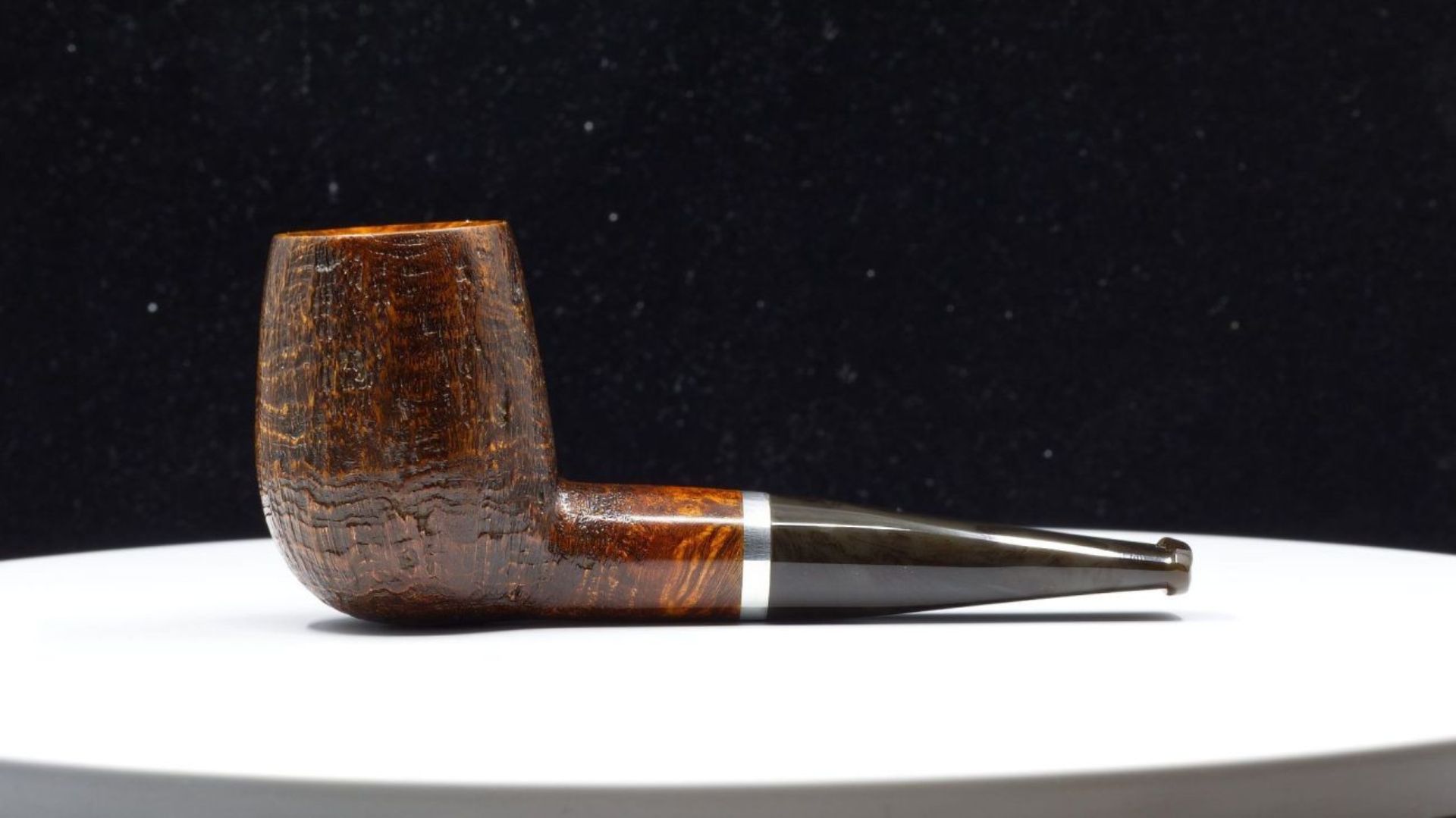
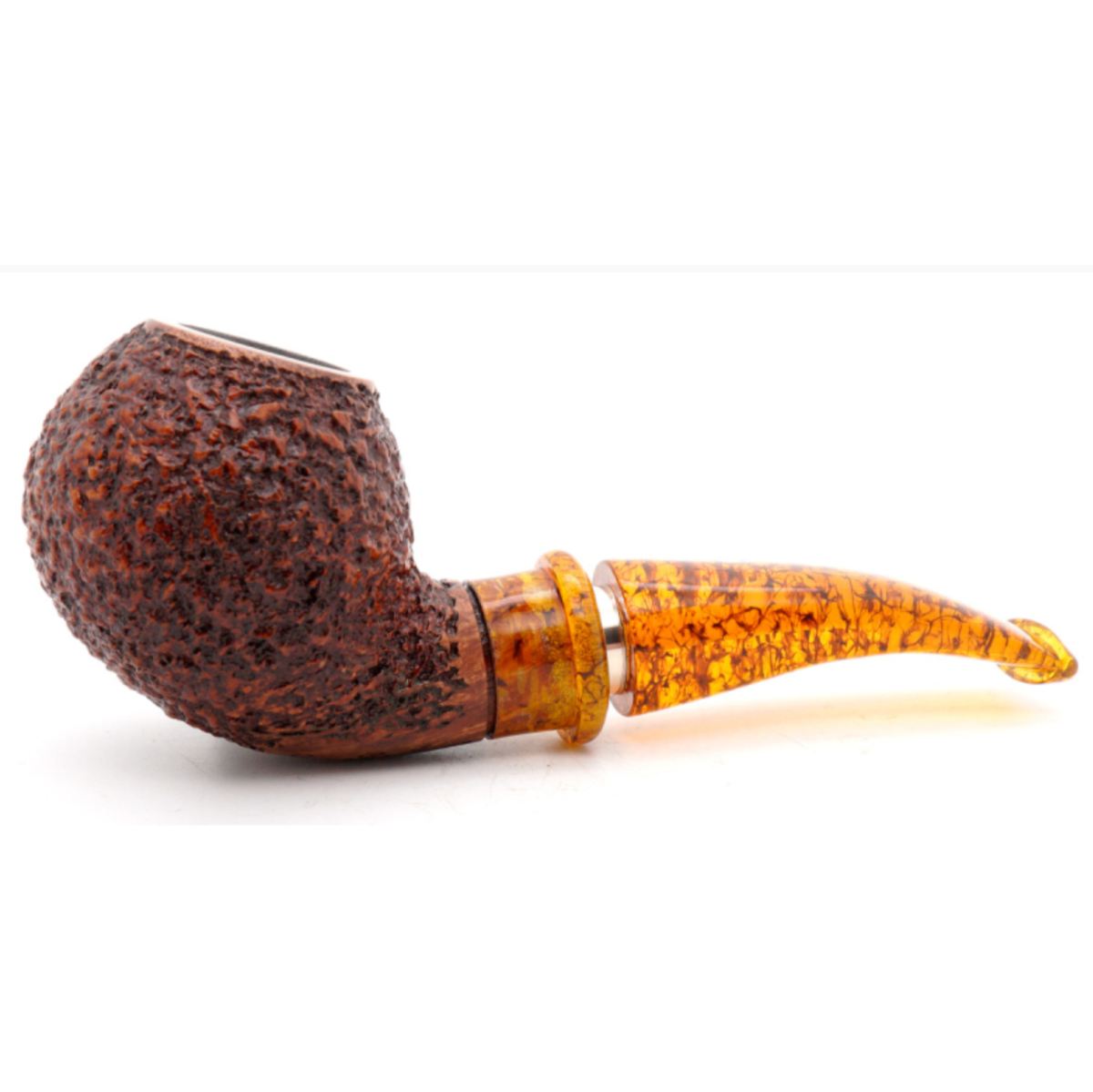
Italian pipes often combine classic European shapes with more pronounced proportions, respect for the grain of the briar, and creative finishes. Rustic finishes, sandblasting, silver rings, horn, or exotic woods are common among artisanal brands.
Luigi Radice and Giuseppe "Peppino" Ascorti worked in the workshop of Castello by Carlo Scotti. In 1968, they jointly founded the brand Caminetto. After its dissolution in the late 1970s, the independent brands Radice and Ascorti emerged.
In addition to the quality of briar and craftsmanship, the individual style of each manufacturer plays a significant role. For brands like Castello, Radice, Ser Jacopo, or independent pipe makers, each piece can be a considerable original and at the same time part of a well-documented pipe-making tradition.
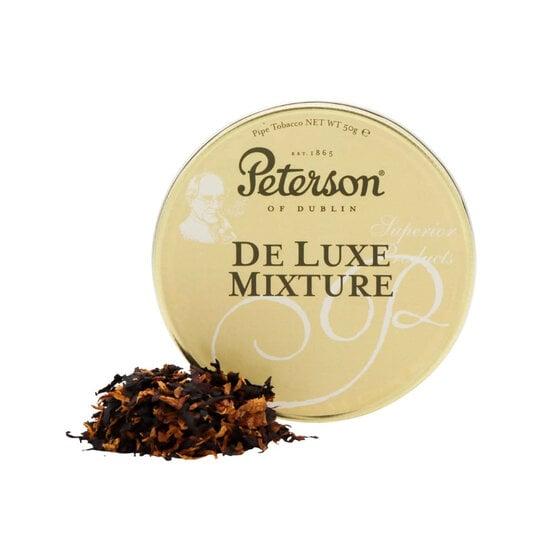
Although the name of the tobacco Peterson De Luxe Mixture may evoke the idea of a strongly flavored, sweet aromatic, in reality, it is a mild and pleasant blend where honey, vanilla, and walnut complement the taste of the tobacco.
The base of Peterson De Luxe Mixture consists of matured Virginias from Brazil and Africa, complemented by mild Black Cavendish. The blend is cut in a classic ribbon cut and is currently produced for the Peterson brand by Scandinavian Tobacco Group in Denmark.
The tobacco composition is as follows:
- Virginia – brings natural sweetness, slightly grassy and occasionally citrus notes
- Black Cavendish – softens the blend, rounds it out, and creates a creamier character
- honey – the main sweet line
- vanilla – more of a subtle accompaniment than a dominant vanilla aroma
- walnut – gives the blend its relatively unusual nutty character
It is the walnut that distinguishes De Luxe Mixture from the flood of vanilla, rum, and fruity aromatics. When smoked slowly, the individual flavors beautifully blend with the tobacco base, creating a creamy, almost dessert-like flavor profile.
Upon opening, we find a mixture of light, brown, and almost black strips (black cavendish) of tobacco. The aroma is usually more pronounced than the actual taste when smoking.
In addition to the expected vanilla, honey, and nuts, some smokers also find notes of chocolate, almonds, caramel, or a light citrus hint. These are, of course, subjective perceptions, not additional flavors declared by Peterson.
Interestingly, the aroma from the tin can create the impression of a much sweeter tobacco than De Luxe Mixture actually is when smoked.
After lighting, the sweeter Black Cavendish usually comes forward first along with the honey aroma. Neither the honey nor the walnuts act as standalone flavors; rather, they create a slightly roasted and sometimes buttery undertone. The vanilla surprisingly remains in the background.
During smoking, the flavoring usually recedes a bit, allowing the tobacco itself to take more space. Virginia adds a light natural sweetness and grassier notes, while Cavendish keeps the smoke soft and rounded.
This is one of the advantages of De Luxe Mixture; the flavor is not the same from lighting to the end. The flavoring is not excessive, and the sweetness does not overpower the taste of Virginia and Cavendish.
Ribbon cut fills the pipe very easily. If the tobacco is too moist after opening or condenses more during smoking, it benefits from approximately 10–15 minutes of drying. It is not good to pack it too tightly; a loosely packed pipe is better.
As with most aromatics with Cavendish, it is advisable to smoke more slowly and cooler. Aggressive puffing can make the smoke hot, and a more sensitive smoker may experience tongue bite. Conversely, at a calm pace, the honey-nut character holds quite well, and the blend burns down to a clean ash.
For surrounding smokers and non-smokers, De Luxe Mixture is among the very pleasant tobaccos. TobaccoReviews rates it as “Pleasant”, with several individual reviewers even rating it as “Very Pleasant”. Comparisons to baking, vanilla pastries, honey, or sweet pastries appear.
Thus, it is one of the aromatics that has a fairly good chance of passing even where the smoke from a Latakia blend would provoke an immediate request to open all windows or leave the space :-).
De Luxe Mixture is not a tobacco built on strength; it is classified as mild to medium.
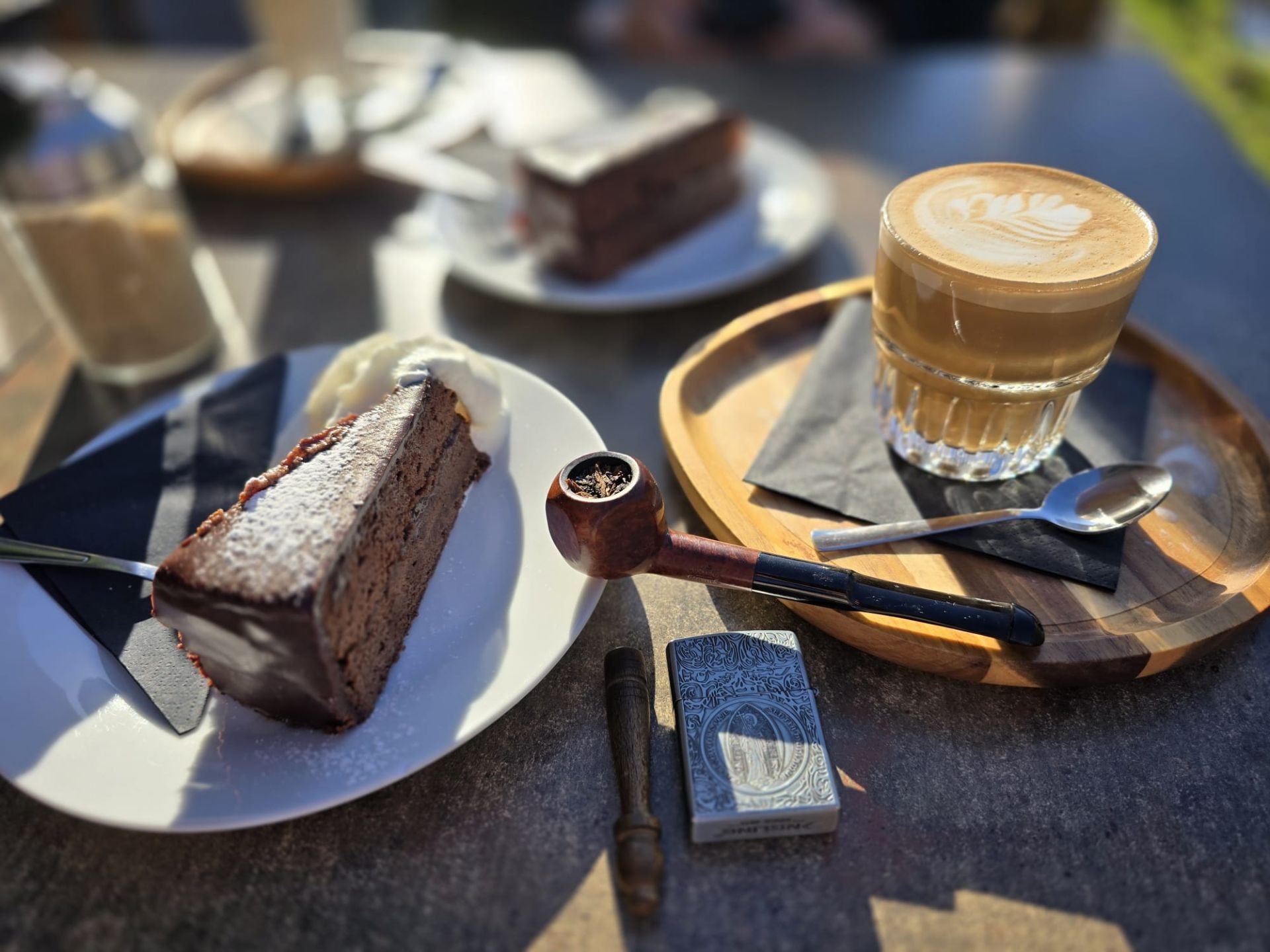
The nicotine strength is rather weak, so it can serve as a relaxing tobacco for coffee, reading, or during longer sitting sessions. For an experienced smoker of strong Burley, Kentucky, or English blends, it may feel too light.
When evaluating the tobacco by experienced smokers, the issue may not be so much the quality of the tobacco but rather the expectations. Those looking for a strong and complex tobacco will likely not be thrilled. Those seeking a mild European aromatic that still allows enjoyment of the tobacco itself may be very satisfied.
De Luxe Mixture stands somewhere between a classic sweet aromatic and a tobacco for smokers who no longer want every puff to taste only of added flavor.
It is particularly interesting for lovers of Black Cavendish, mild Peterson aromatics, and sweeter tobaccos who prefer honey, vanilla, and nuts over distinctly fruity flavors.
It can also be a very pleasant entry tobacco for novice pipe smokers. Just remember that a light tobacco does not mean a tobacco that can be smoked quickly – a calm pace can bring out the best in De Luxe Mixture.
Peterson De Luxe Mixture is a pleasant, rounded, and relatively unobtrusive aromatic, whose greatest strength is its balance. Honey adds sweetness, walnut provides an interesting character, vanilla rounds everything out, and beneath the flavoring, Virginia and Black Cavendish remain distinctly recognizable.
It is not a tobacco that would impress with its strength and intensity of aroma, but it is a pleasant companion for everyday smoking. Perhaps due to that balance, it deserves the designation De Luxe.
As usual, the Smokingpipes.com team has prepared another set of wallpapers for mobile devices as well as backgrounds for your laptop or desktop. This time, the selection includes pipes from manufacturers Flávio Rodrigues Pipes, Former Pipes,G. Penzo Pipes, Peter Heding Pipes andTodd Johnson Pipes.
The wallpapers are waiting for you at this link.
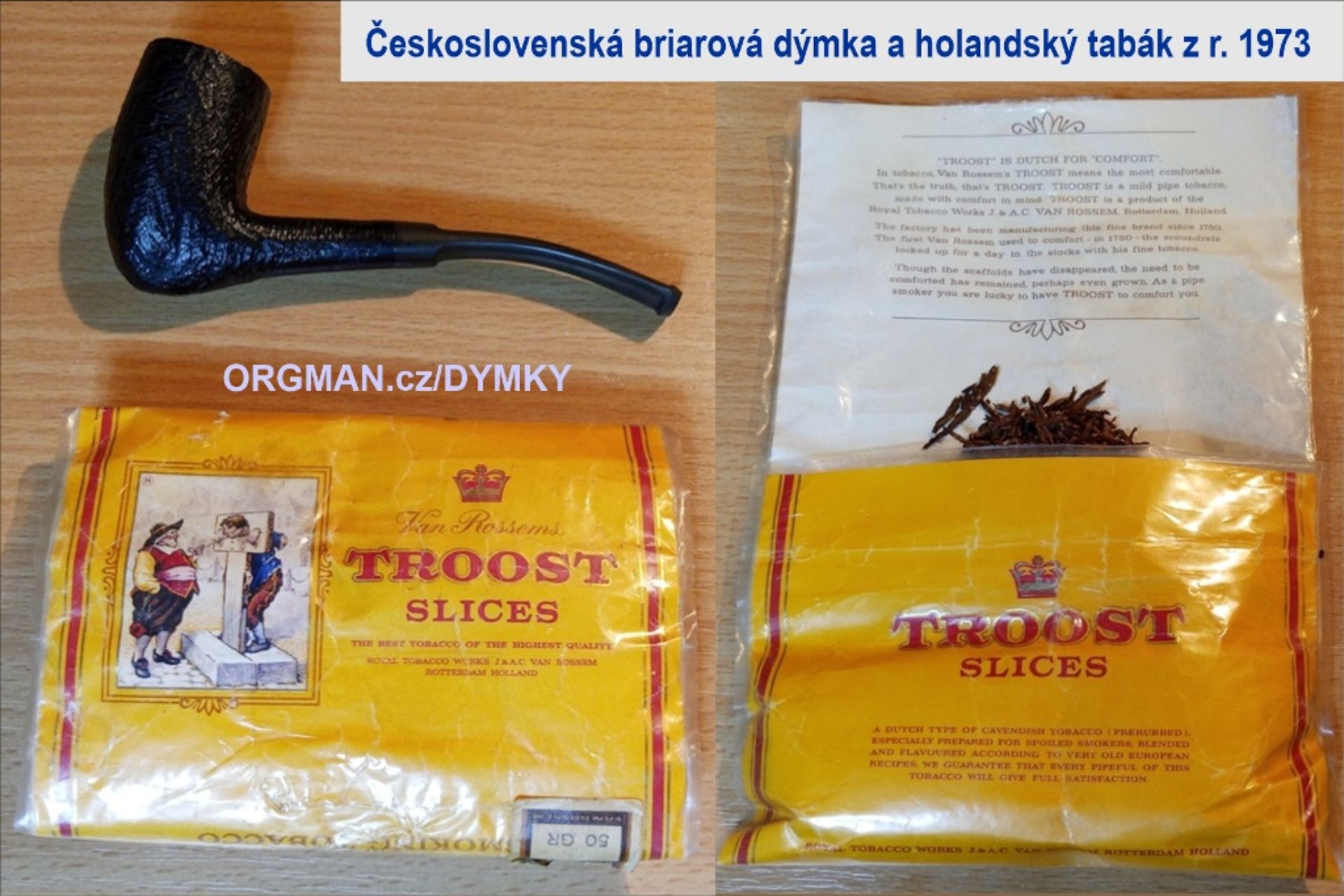
🏺 I bought Dutch tobacco TROSOST SLICES as a high school graduate around 1973 for about 15 Kčs. Its production under the original Dutch brand J. & A.C. van Rossem, established in 1750 in Rotterdam, ended in 1990.
✅ A briar pipe without a manufacturer’s mark intended for the domestic market could be purchased in 1973 for about 17 Kčs (the average monthly gross salary in 1973 was 2164 Kčs).
🔥 Finding a replacement for the 53-year-old Troost Slices in 2026 proved difficult, and even AI couldn't find a suitable alternative. If I want to indulge in some retro smoking while conserving my precious supplies, I will grind the original "Troost" into my pipe from 1973 with the new Mac Baren 7 SEAS ROYAL BLEND. 😉
Orlik Dark Strong Kentucky – contrast of light Virginia and dark Kentucky
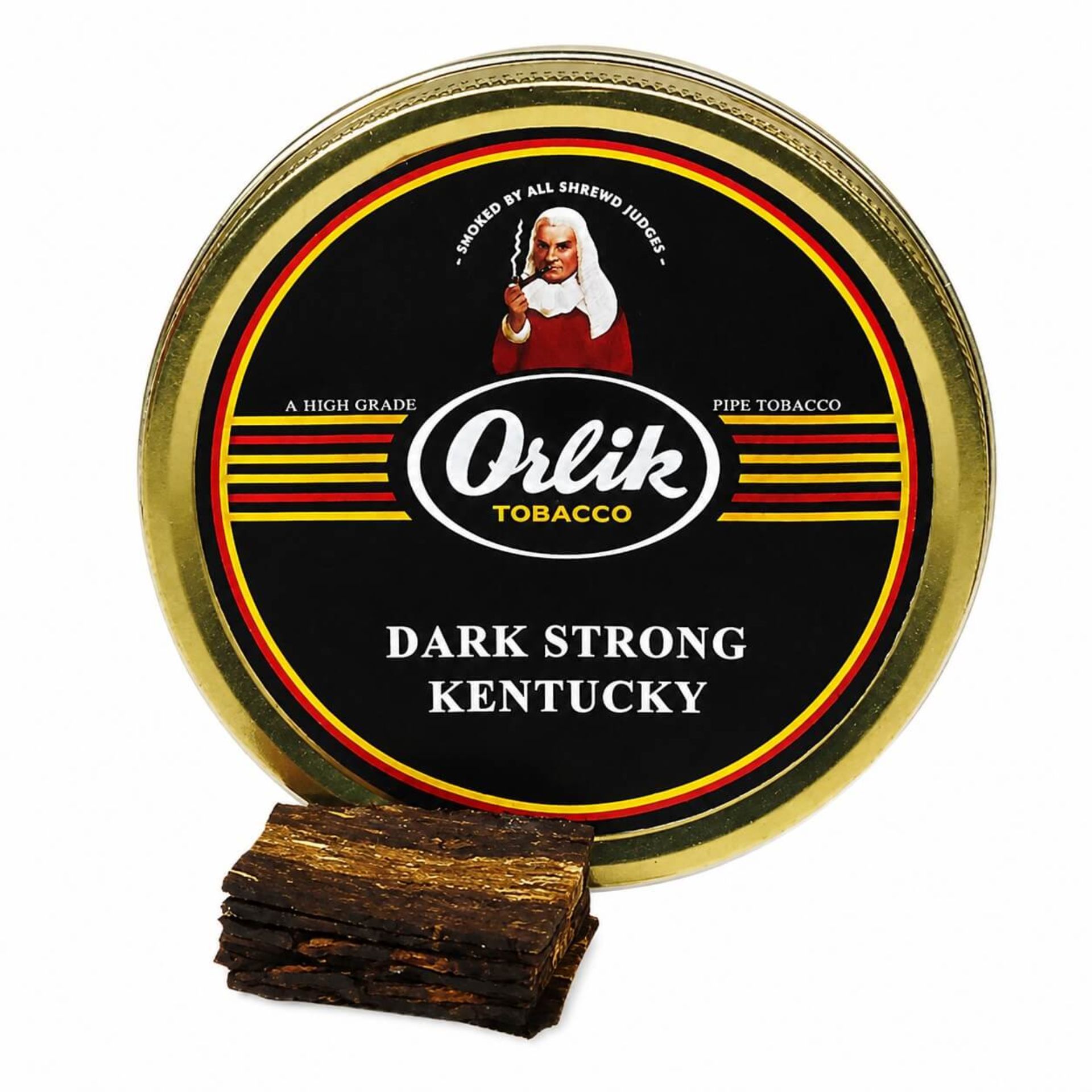
Orlik Dark Strong Kentucky is one of the pipe tobaccos that are no longer produced today, which has gained a significant reputation among flake lovers. The blend is based on a combination of selected Virginias and fire-cured Dark Fired Kentucky. The tobaccos are pressed and cut into dense slices, where the contrast of light and dark layers is clearly visible.
Despite its name, it is not an exceptionally strong or harsh Kentucky blend. The sweeter Virginia and distinct sweet treatment of the tobacco smooth out the smoky, earthy, and spicy character of Kentucky. The result is rather a sweeter Virginia/Kentucky flake with medium strength than a tobacco "nicotine bomb."
Flavor descriptions often include notes of molasses, brown sugar, licorice, dark bread, wood, and mild spices. Some smokers also mention maple sweetness, caramel... However, the exact recipe for flavoring has not been publicly disclosed by the manufacturer, so it is more appropriate to understand these characteristics as flavor impressions rather than a confirmed list of used aromatics.
🍃 Smoking and preparation of Orlik Dark Strong Kentucky
Dark Strong Kentucky was sold in the form of firmly pressed flake. The slices can be folded and placed directly into the pipe, but they generally light better after a light rubbing. The tobacco tends to be quite dense, and if it is moist after opening, a short drying period may benefit it. The exact time depends on the age and condition of the specific tin.
After proper preparation, it burns slowly and relatively cool. It benefits from a calm smoking pace, as rapid puffing may cause the sweet Virginia to lose its finer flavor and start to bite the tongue.
The beginning of smoking is usually sweeter, with tones reminiscent of molasses, dark sugar, or licorice. As it progresses, the earthy, woody, spicy, and slightly smoky characteristics of Kentucky may become more pronounced. In the end, a drier character, a subtle citrus note, or grassier tones of Virginia may sometimes appear.
The nicotine strength is approximately in the medium range. The designation "Dark Strong" is therefore somewhat misleading – the tobacco has a fuller flavor and dense structure, but in terms of nicotine, it usually does not feel as strong as its name might suggest.
⚙️ Production and history of Orlik Dark Strong Kentucky
Dark Fired Kentucky gains its character during drying over fire. The tobacco leaves are hung in dryers, where hard wood and sawdust are allowed to smolder beneath them for several weeks. The smoke affects the color, structure, and flavor of the leaves, bringing typical earthy, woody, spicy, and slightly smoky tones.
In Orlik Dark Strong Kentucky, a more robust Kentucky tobacco is combined with sweeter Virginia. The subsequent pressing into a tobacco cake connects the individual components, and after cutting, it creates characteristic two-colored slices. The dense pressing also contributes to slower burning and a more concentrated flavor.
The blend has disappeared from the market several times in the past and subsequently reappeared. In the mid-second decade of the 21st century, it was brought back to the American market by Scandinavian Tobacco Group in fifty-gram tins. However, production was halted again, and today Orlik Dark Strong Kentucky primarily appears in private collections and auctions.
📓 Summary of characteristics of Orlik Dark Strong Kentucky
It can best be characterized as a sweet Virginia/Kentucky flake with a molasses to licorice impression, medium strength, and an unusually contrasting appearance. A smoker expecting a dry, very smoky, and nicotine-heavy Kentucky blend may be surprised. Conversely, lovers of sweeter flakes and tobaccos that straddle the line between natural and lightly flavored blends may be attracted by its balance.