


Meerschaum - the white legend of the pipe world
The meerschaum pipe is one of the most distinctive symbols of classic smoking culture. It is lightweight, elegant, often richly carved, and over the years acquires a unique patina. It embodies the old craft, history, and the distinctive charm of a material that pipe smokers and collectors have valued for centuries.
Meerschaum - a material that cannot be mistaken
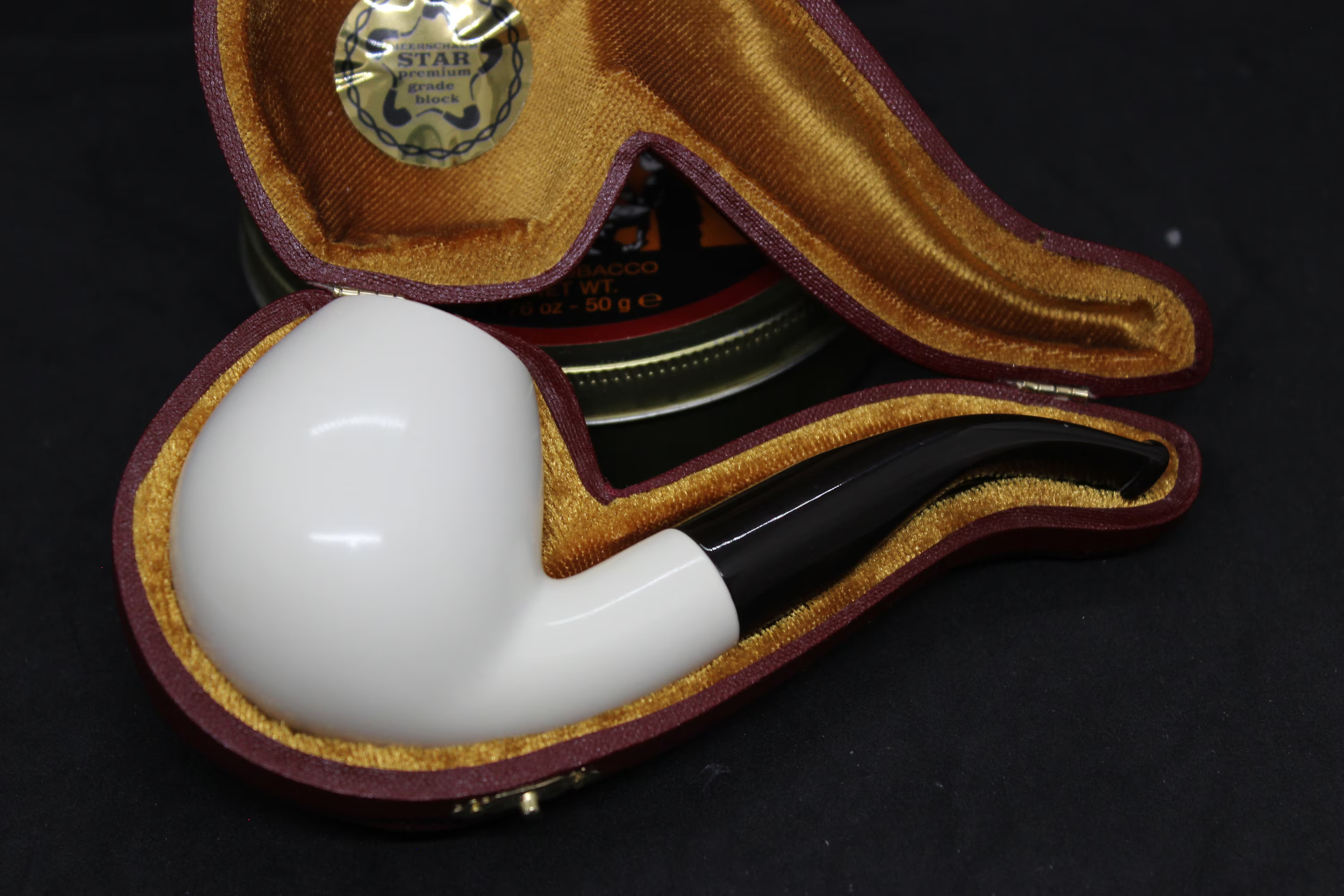
Meerschaum, often referred to in Czech as mořská pěna, is a white mineral whose name comes from German. It has been used for pipe making since the early 18th century, and its name is most closely associated with Turkey, especially the region of Eskişehir, where it is traditionally mined and processed. The very appearance of this material is exceptional: its light, fine, and almost porcelain-like surface gives the pipe an elegance that other materials rarely offer.
The meerschaum pipe as a craft and cultural heritage
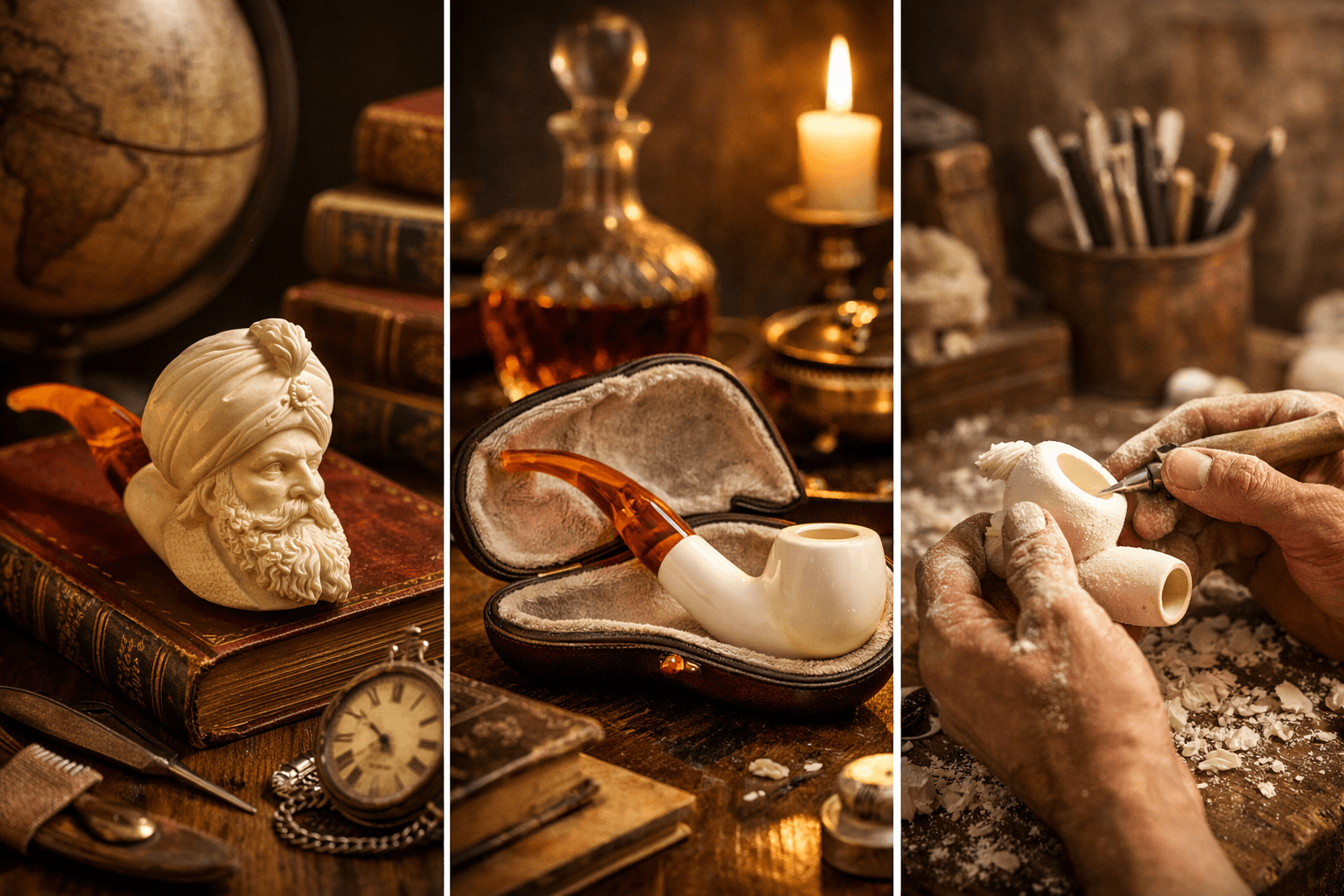
What is appealing about a meerschaum pipe is that it carries more than just function. It is the result of a craft tradition that is often passed down through generations. From an unassuming block of mineral, a skilled master can create an object that can be both a smoking instrument and a small work of art. This connection to living craftsmanship gives meerschaum a special dignity and cultural depth, especially when you bring a pipe home from a Turkish pipe workshop where you purchased it yourself.
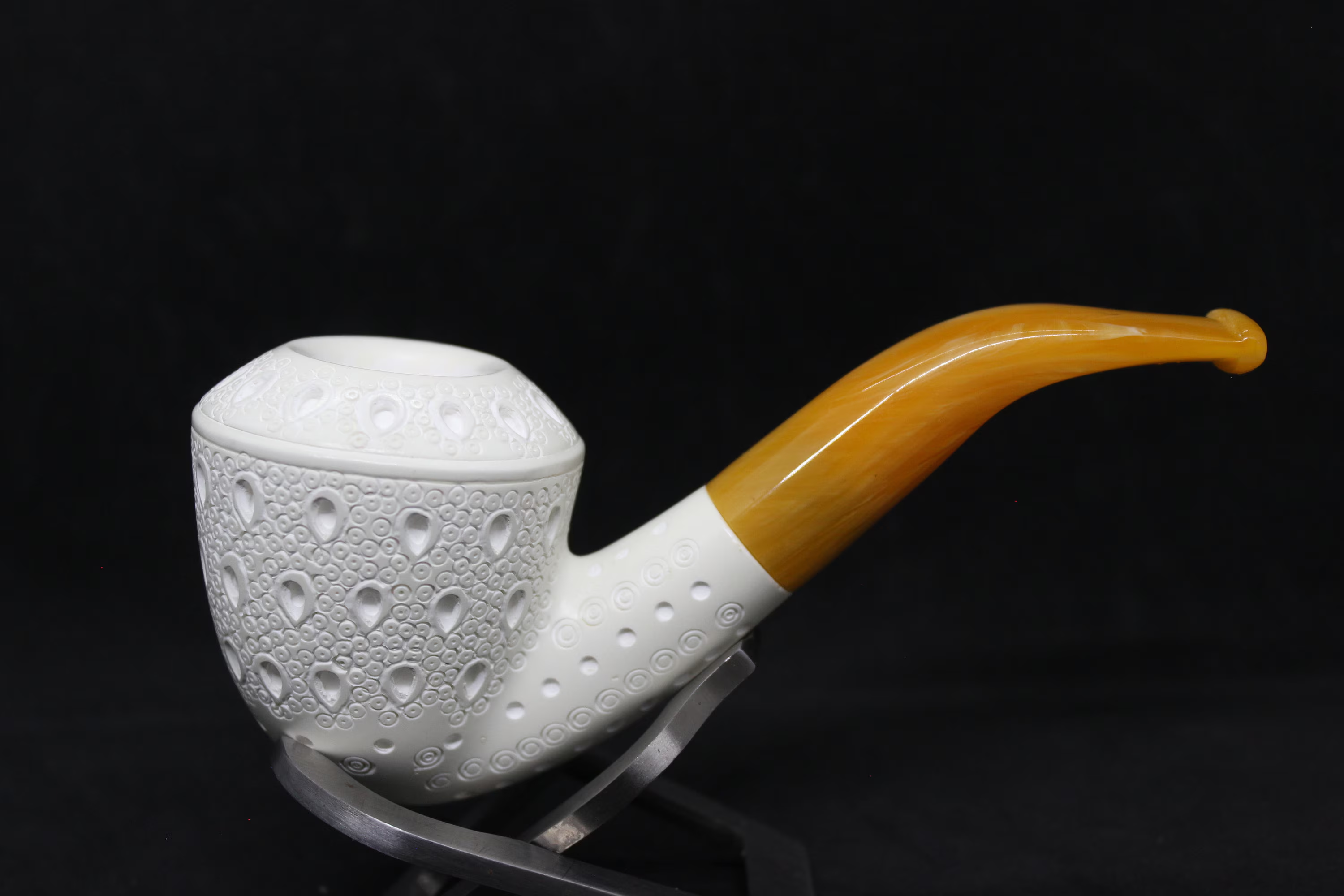
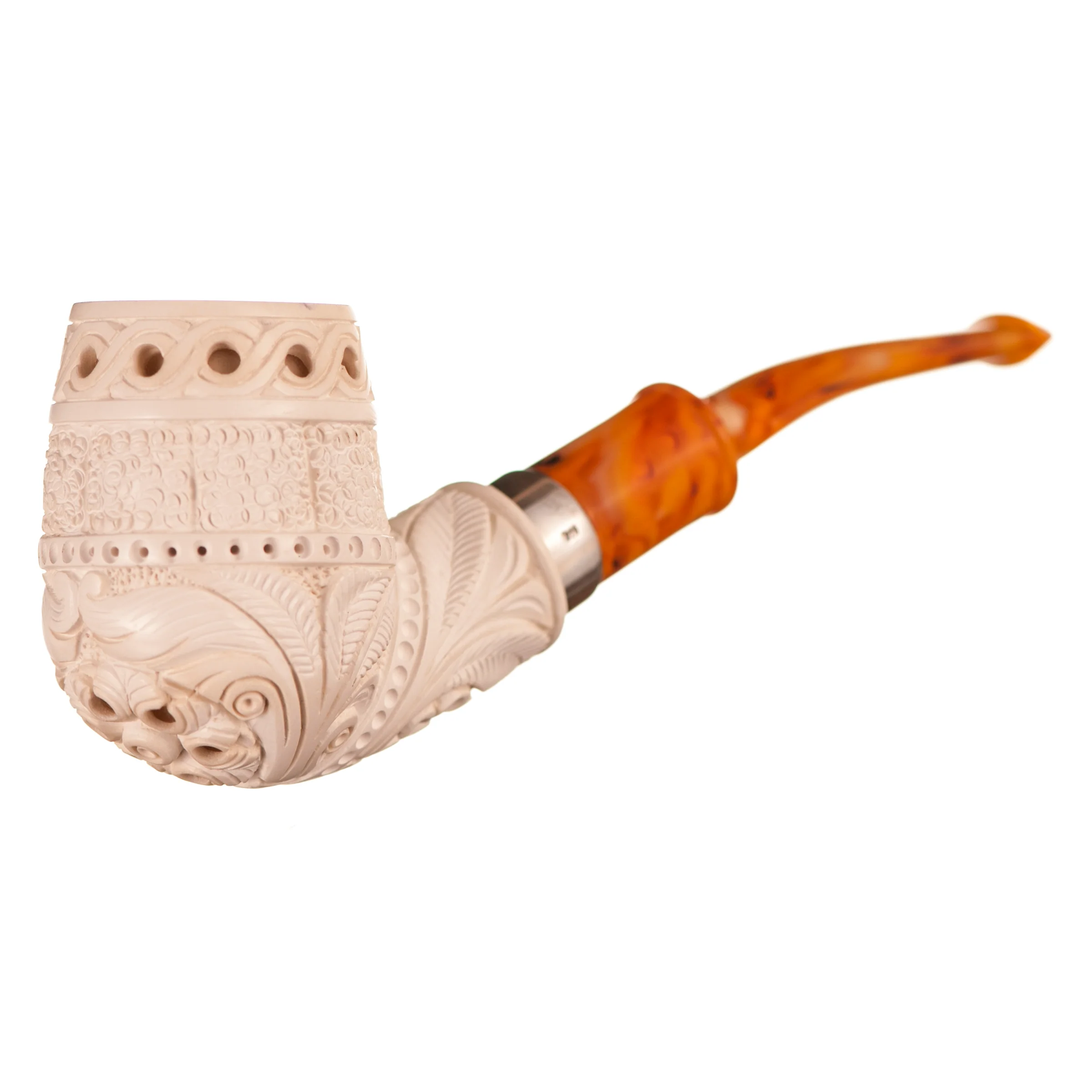
The production of a meerschaum pipe is labor-intensive and significantly relies on manual work. After extraction, the material is dried, cut into blocks, and then shaped and decorated by hand. Some pipes have classic, streamlined lines, while others bear rich carved motifs, such as faces, animals, or floral ornaments. In any case, these are objects that carry the signature of their creator. This uniqueness gives meerschaum a value that mass production cannot replace.
Lightness, cool smoke, and pure expression
The popularity of meerschaum is not just based on appearance. Smokers appreciate it for its smoking properties as well. A significant advantage is the low weight of the material and its ability to provide a cooler and drier smoke. Due to its porous structure, it can absorb some of the tar and nicotine, contributing to a cleaner smoking experience. Thus, meerschaum has been valued not only as a representative material but also as a very practical choice for everyday smoking.
Beauty that develops over time
One of the greatest charms of a meerschaum pipe is its transformation over the years. Initially, it is light and even white, but gradually it acquires warmer shades of honey, gold, or amber. This patina is not perceived as a flaw but rather as a sign of life and use. Each smoking leaves a mark, and the pipe slowly matures along with its owner. Its true character is formed not only in the workshop but also over time.
A symbol of elegance and refined taste
The meerschaum pipe offers elegance, sophistication, and an old-world charm. It has been smoked by Mark Twain and Albert Einstein. It is not merely a decorative symbol. Meerschaum represents a certain approach to pipe smoking: slower, more focused, and deeply rooted in tradition. It is a material for those who appreciate not only the taste of tobacco but also the beauty of the object itself.
Despite modern alternatives, meerschaum pipes have not remained just in collectors' showcases. They still hold a firm place among connoisseurs and contemporary smokers who seek something more personal than mass production. Old pieces attract with their patina and history, while new ones prove that this tradition is still alive.
The quiet luxury of the pipe world
When meerschaum pipes are spoken of as symbols of elegance, it is not an exaggeration. They are lightweight, beautiful, variable, and carry the mark of human hands and time. This is precisely why a meerschaum pipe retains its charm even today—as an artifact where function, tradition, and distinctive beauty converge.